
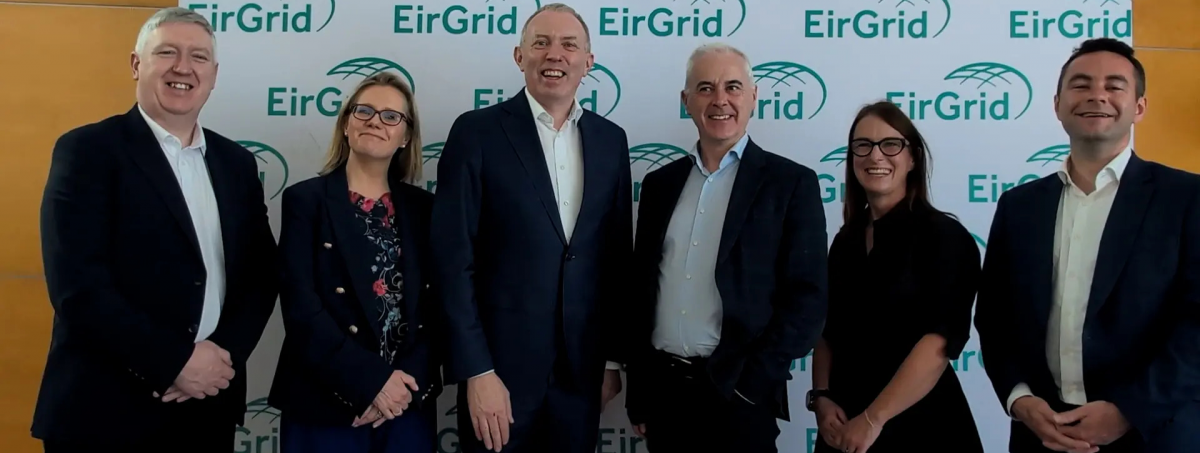
EirGrid announced a procurement package worth hundreds of millions of euros for offshore wind on 22 April 2026, launching the Powering Up Offshore South Coast Tonn Nua Substation Package, the first major transmission procurement under its offshore framework. The scope covers the design, fabrication, installation and commissioning of offshore substations, associated high-voltage equipment and onshore compensation compound works, and the procurement opened through the Achilles Supply Line Platform on 23 April 2026. For engineering companies and the engineering industry across electrical engineering, structural engineering and mechanical engineering ireland disciplines, a defined package with an open route to market is a significant milestone.
The package sits within the plan-led approach Ireland adopted in 2021, under which EirGrid has been tasked with bringing forward a plan to deliver the Government’s ambition of 5 GW of offshore wind. Tonn Nua, a 900 MW fixed-bottom wind farm off the Waterford coast, reached its final auction result on 9 December 2025, and EirGrid will construct the offshore and onshore substations and export cables. The project is expected to save 1.8 million tonnes of carbon dioxide each year once built, contributing to national renewable energy targets. EirGrid has used an integrated and scalable packaging strategy informed by extensive market engagement, which helps suppliers plan resources with confidence. EirGrid describes the package as evidence of progress towards delivering offshore renewables at scale.
The engineering design requirements are broad. Offshore substations call for structural engineering of platforms and support structures, electrical engineering of high-voltage equipment, and mechanical engineering of ancillary systems. Onshore compensation compounds add civil engineering ireland works in foundations, drainage and access alongside electrical installation. Fabrication and manufacturing of large steel structures and high-voltage equipment form a substantial part of the value chain, while installation and commissioning bring marine and electrical specialists together. Each element is a distinct opportunity within the wider infrastructure engineering programme.
Sustainable engineering and sustainability in engineering sit at the heart of the programme, since offshore wind underpins Ireland’s climate objectives. Engineering technology, including digital design models, condition monitoring and the survey data EirGrid is gathering in its ongoing south coast surveys, supports confident design decisions. Engineering innovation in modular design and fabrication efficiency can reduce programme risk, and engineering excellence in quality, safety and environmental management will distinguish strong bidders. Guidance from the Maritime Area Regulatory Authority and Wind Energy Ireland helps firms understand the consenting and technical context.
Three project delivery priorities follow. Engineering companies should register on the Achilles platform and engage with EirGrid early, as its chief executive has encouraged the whole supply chain to do. Design and fabrication firms should form consortia that combine structural, electrical and marine capability, since the scope spans several disciplines. Civil and electrical contractors should prepare for onshore compound works. Early preparation lets firms build teams and supply relationships ahead of award. Teams planning engineering projects across the 5 GW pipeline should treat this package as a template for future procurements, and engineering leadership shown now will shape how the sector matures.










.png)