
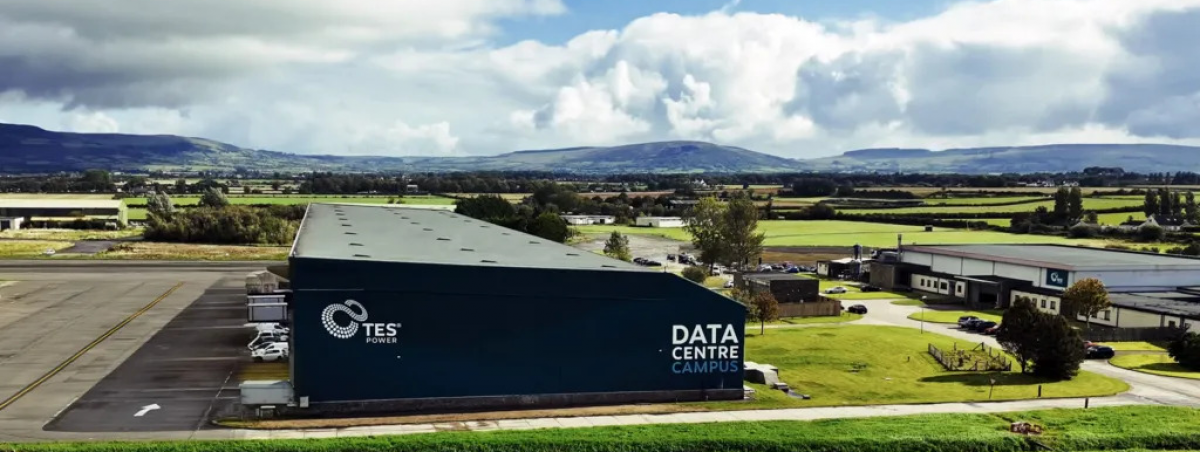
The acquisition of Northern Ireland's TES Group by French industrial giant Legrand, reported by the BBC, is the latest signal that Irish engineering firms have become prized global assets in the race to build the physical backbone of artificial intelligence. Within days of the TES deal, Bureau Veritas agreed to pay €375 million for Sligo-based LotusWorks, a specialist in data centre commissioning and maintenance. These transactions are not isolated windfalls. They form part of a broader pattern of deal-making that stretches from Cork to Donegal, and from private equity boardrooms in London to corporate headquarters in Paris and New York. For C-suite leaders in the engineering excellence sector, the message is unambiguous: Ireland has become a strategic supplier to the world’s most capital-intensive technology build-out in a generation.
The acquisitions deserve more than applause. They represent a structural validation of Irish engineering capability, yet they also raise urgent questions about whether the country can sustain its competitive position as demand accelerates. The sector’s strength rests on three interconnected pillars: the scale and speed of global data centre investment, the depth of indigenous engineering expertise, and the resilience of Ireland’s energy and regulatory infrastructure. Each presents both an opportunity and a risk that the sector’s leadership must now address with equal rigour.
The investment tailwind is formidable. Morgan Stanley estimated in 2025 that as much as $3 trillion (approximately €2.57 trillion) will be spent on data centres to support AI between 2025 and 2029. In Ireland specifically, the data centre construction market is estimated at $3.38 billion (approximately €2.89 billion) in 2026 and is projected to reach $7.16 billion (approximately €6.12 billion) by 2031, growing at a compound annual rate of 16.19%. Europe’s data centre market is forecast to grow 15% annually, with investment projected to rise from €50 billion in 2025 to €90 billion by 2030, driven by AI, cloud adoption, and 5G connectivity. Irish firms, including TES, LotusWorks, Kirby Group, Suir Engineering, and the Dornan Group, have accumulated the specialised capabilities in power infrastructure, mechanical and electrical systems, and commissioning that global hyperscalers now urgently require.
Yet the human capital underpinning this success is under acute strain. Over 83% of Irish employers are struggling to hire qualified professionals, putting at risk the 40,000 new roles projected between 2025 and 2030. In the data centre sector specifically, skilled mechanical and electrical talent has been in extremely high demand, with local talent struggling to keep pace with the rapid growth of hyperscale and enterprise data centres. A ManpowerGroup report found that 78% of companies are reporting skills shortages in IT roles, with IT and data skills identified as the most difficult to source. For engineering firms now operating at scale across multiple European markets, an inability to staff major projects on time is not merely an operational inconvenience; it is a direct threat to hard-won international reputations and contract pipelines.
The energy and regulatory environment adds another layer of complexity. Ireland’s data centres account for 21% of the country’s total electricity consumption, and the share is expected to rise to a third by 2026, raising concerns about rolling blackouts and prompting a pause on new data centre connections in Dublin and Greater Dublin until 2028. As of late 2025, some €5.8 billion worth of Irish data centre projects were stranded, with land and permits in place but no grid capacity to connect them. Ireland formally ended its three-year moratorium on new grid connections in December 2025, with the Commission for Regulation of Utilities publishing strict new criteria for facilities seeking connection, designed to balance economic growth with decarbonisation targets. Engineering firms with deep expertise in power systems and sustainable infrastructure design are well-placed to help clients navigate these constraints, but only if they invest proactively in that capability.
Three strategic priorities stand out for sector leaders. First, engineering firms should accelerate structured apprenticeship and graduate conversion programmes in partnership with Technological Universities Ireland and Enterprise Ireland, targeting mechanical, electrical, and power systems disciplines where shortfalls are most acute. Second, firms should invest in proprietary capabilities in renewable energy integration and energy storage systems, positioning themselves as indispensable partners to data centre developers navigating Ireland’s new grid connection rules and the EU’s tightening energy efficiency directive requirements. Third, sector leaders should engage collectively with the Irish Government’s Large Energy User Action Plan and the Commission for Regulation of Utilities to shape the evolving regulatory framework, rather than reacting to it, ensuring that infrastructure policy enables rather than constrains the sector’s international competitiveness.
The story of Philip O’Doherty, whose Donegal-based E&I Engineering was sold to Vertiv Holdings for a sum that has since grown to approximately £2.5 billion (approximately €2.89 billion) in total value, is a vivid illustration of what disciplined engineering excellence can ultimately yield. The deals involving TES Group, LotusWorks, and the Dornan Group suggest that O’Doherty’s outcome was not an anomaly but a harbinger. As AI investment continues to reshape global infrastructure priorities, Irish engineering firms stand at a rare inflection point, possessed of deep technical credibility, a growing international footprint and the attention of the world’s most acquisitive industrial buyers. The firms that invest now in talent pipelines, sustainable energy competencies, and regulatory engagement will not merely benefit from the next wave of deals; they will define the terms on which they are made.
(The views expressed by the writer are his/her own and do not necessarily reflect the views or positions of BusinessRiver.)









.png)