
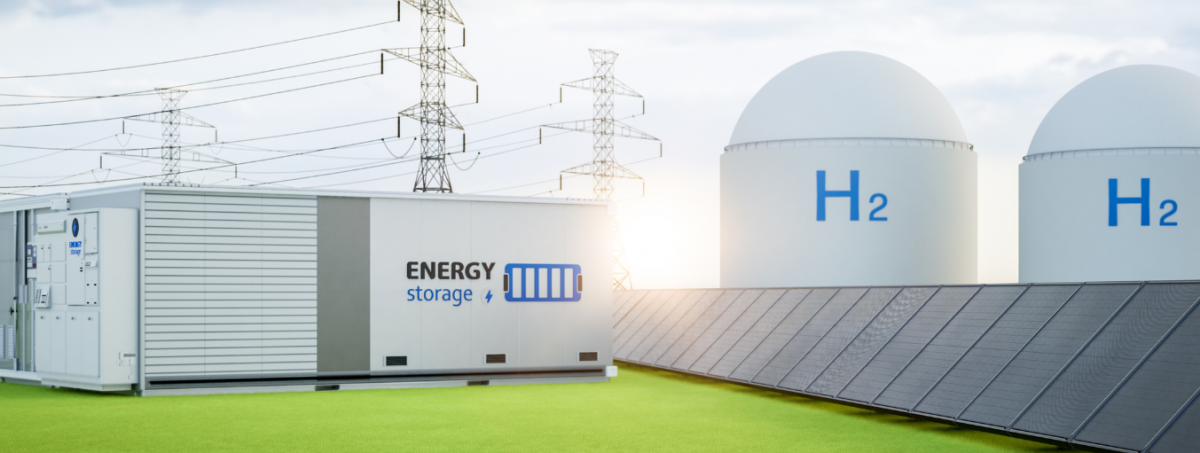
Ireland’s hydrogen production potential significantly exceeds its expected domestic demand, according to the Exporting Hydrogen from Ireland study published by the Department of Climate, Energy and the Environment on 6 February 2026. Commissioned from ARUP as Action 8 of the National Hydrogen Strategy, the study identifies continental Europe as the primary export destination, reviews repurposing existing gas pipelines, new hydrogen pipelines and non-pipeline shipping as the three engineering infrastructure routes, and positions Ireland’s offshore wind resource as the production base for a renewable energy export economy not yet built. For engineering companies and the engineering industry, that gap between strategy and infrastructure defines the commercial opportunity of the next decade.
The engineering design challenge is substantial. Ireland’s west coast holds among the largest offshore wind resources in Europe, and the National Hydrogen Strategy envisions large-scale green hydrogen production from electrolysis powered by that resource. Gas Networks Ireland’s transmission network provides a possible foundation, but repurposing steel pipelines for hydrogen requires material specification changes, compression redesign and integrity management protocols representing a significant mechanical engineering ireland workload. New-build pipeline along a west-to-east corridor would be among the largest civil engineering projects in the history of the state. Shipping hydrogen as ammonia or liquid hydrogen requires port engineering, cryogenic systems and marine logistics without precedent.
Sustainability in engineering terms is embedded in the rationale for the entire programme. Green hydrogen from renewable energy exported to decarbonise hard-to-abate sectors in continental Europe, including steel, chemicals, aviation and heavy transport, represents applied sustainable engineering at a geopolitical scale. The engineering technology required, spanning electrolysers, compression systems, pipeline materials, storage and shipping infrastructure, is an engineering innovation challenge drawing on mechanical, chemical, civil and process disciplines. For engineering companies seeking to position in this market, the ARUP study is the first authoritative scoping of what the physical infrastructure requires.
The engineering industry in Ireland is well placed to develop hydrogen infrastructure capability. The Hydrogen Taskforce, launched in July 2025, provides the governance framework within which engineering companies can engage on standards and procurement. The Shared Island Initiative’s hydrogen refuelling stations study, published November 2024, confirmed an all-island network of five to six stations required by 2030, providing a near-term engineering projects pipeline with defined completion dates. Infrastructure engineering firms and mechanical engineering ireland specialists have a credible entry point through refuelling infrastructure before larger export pipeline systems reach procurement.
Three engineering priorities follow. Engineering design standards for hydrogen pipelines, particularly for repurposed gas network assets, need to be developed as a matter of project delivery urgency before any export corridor procurement begins. Electrolyser manufacturing capacity must scale if domestic production volumes are to justify export infrastructure investment. Sustainable engineering practice in lifecycle assessment, measuring the carbon intensity of hydrogen production across the supply chain, needs to become a standard deliverable. The renewable energy transition does not end with electricity. Hydrogen extends it into the hard-to-decarbonise economy, and the engineering companies that build hydrogen capability now will be better placed than any others to deliver it.
(The views expressed by the writer are his/her own and do not necessarily reflect the views or positions of BusinessRiver.)









.png)